
WELCOME BONUS 300%
UP TO €2000 + 100
FREE SPINS
UP TO €2000 + 100
FREE SPINS
Home → Games
All casino games at Zumo Casino
Three Roulette Variants and Their House Edges
Roulette French on inside bets carries a house edge of 2.70%, because La Partage does not cover Straight, Split, Street, Corner or Six Line wagers. That is the same European level of 2.70% as on a 37-pocket wheel without the rule. A €100 stake on any inside position therefore costs €2.70 on average over the long run. Only outside even-money bets can benefit from the half-stake return.
The Straight bet pays 35:1, while the Split pays 17:1 and the Street pays 11:1. The Corner returns 8:1 and the Six Line 5:1, with Dozen and Column each at 2:1. None of these inside payouts changes the 2.70% edge, because the payout is always one unit short of the true 36:1, 18:1, 12:1, 9:1, 6:1 or 3:1 odds on 37 numbers. That missing unit is the casino’s margin.
La Partage on French Roulette applies only to even-money outside bets, never to inside positions. A player backing a single number with €50 has an expected loss of €1.35 per spin at the 2.70% edge, since 50 € x 2.70% = 1.35 €. The same €50 on an even-money outside bet with La Partage would return €25 on a zero, which changes the calculation. Inside bets remain at the fixed 2.70%.
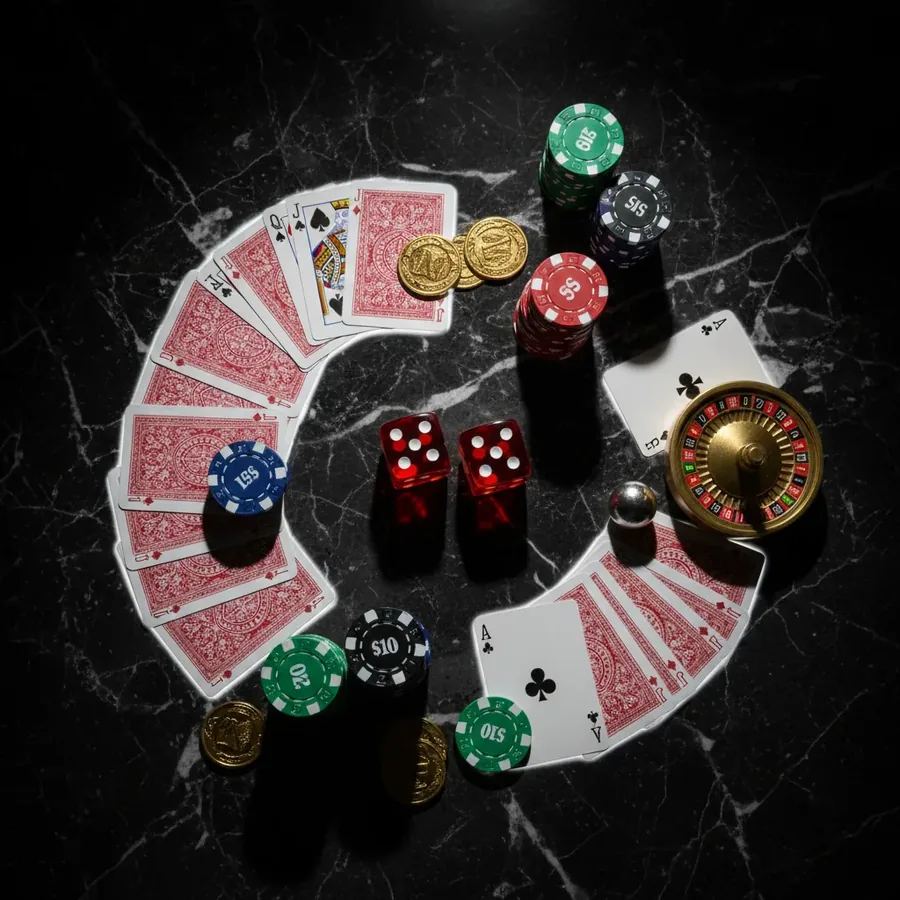
Jacks or Better 9/6: 99.54% RTP
Video Poker Jacks or Better 9/6 with optimal strategy reaches an RTP of 99.54%, leaving a house edge of 0.46%. The designation 9/6 means a Full House pays 9 per coin and a Flush pays 6 per coin. The Royal Flush bonus of 4,000 requires the maximum bet of 5 coins. With €100 staked in total, the expected loss is only 0.46 € on average, but only with flawless play.
The standard deviation for this full-pay table is 4.42, which is high for a game with such a narrow house edge. A Straight Flush pays 50, Four of a Kind pays 25, and a Straight returns 4, while Three of a Kind pays 3, Two Pair pays 2, and Jacks or Better pays 1. A Royal Flush pays 800 per coin, rising to 4,000 for five coins. The volatility means short sessions can swing far from the 99.54% average.
The short-pay Jacks or Better 8/5 table shows how two payout units alter the game: its RTP drops to 97.29% and the house edge rises to 2.71%. Cutting the Full House from 9 to 8 and the Flush from 6 to 5 costs 2.25 percentage points of RTP against the 9/6 full-pay version. Intermediate tables such as 9/5 reach 98.45% and 8/6 reaches 98.39%, both below the 99.54% benchmark.
When Does Splitting Aces and Eights Make Sense?
Splitting aces and eights in blackjack follows basic strategy: always split a pair of aces and always split a pair of eights, because each ace starts a hand at 11 and each eight turns a hard 16 into two starting hands. The alternative, playing 16 as a single hand, loses far more often than two eights played separately.
The maths behind the eight is blunt: 16 against a dealer's 10 wins roughly 23% of the time when hit or stood, while two hands beginning at 8 each win close to 38% against the same upcard. A pair of aces played as one totals 12, but split it produces two hands starting at 11, each with a strong chance to reach 21.
Late surrender changes the picture for pairs that cannot be split profitably. Surrendering costs half the stake, an effect worth about 0.08 percentage points of RTP, and the player gives up the hand only after the dealer has checked for blackjack. Against a strong dealer upcard, surrendering a 16 can beat splitting into two weak hands.
Before Doubling Down: Read the Dealer's Upcard
Baccarat Player on 8 decks has an RTP of 98.76% and a house edge of 1.24%, with a straight 1:1 win and no commission. The edge is 0.18 percentage points higher than on Banker, and standard deviation is 0.95. In Blackjack, the decision to double down must be read against the dealer’s open card, because the house edge on any optional wager changes with the exposed information.
The Banker bet in Baccarat remains the better main bet even with its commission, because the Player edge of 1.24% is higher by 0.18 percentage points. A €100 stake on Player loses €1.24 on average, while the same sum on Banker loses less after commission. The open dealer card in Blackjack works the same way: doubling against a dealer 6 is stronger than doubling against a dealer 10, because the dealer’s bust probability shifts.
Craps Pass Line and Come both show an RTP of 98.59% and a house edge of 1.41% per resolved bet, with a per-roll edge of 0.42% and standard deviation of 1.00. Don’t Pass and Don’t Come are slightly better at an edge of 1.36%, because 7 wins and 12 is a push. Doubling down in Blackjack should be read the same way: the open dealer card determines whether the extra stake has a positive expectation.
35:1 Instead of 36:1: Where the House Edge Comes From
A Straight bet on French Roulette pays 35:1, not the true odds of 36:1 on a 37-pocket wheel. The missing unit is the house edge of 2.70% on inside bets, because La Partage does not apply to a single number. A €10 straight bet returns €350 on a win, but the true probability would require €360. Over 37 spins, the casino keeps one full stake on average.
Sic Bo Small and Big under Atlantic City rules carry a house edge of 2.78% and pay 1:1. Small covers totals of 4–10 and Big covers 11–17, but a triple loses both. The best special bet in Sic Bo is a Single Number at a 7.87% edge, while a Specific Double is the worst at 18.52%. Any Triple shows 13.89%, Specific Triple 16.20%, and Two-Dice Combo 16.67%.
Sic Bo special bets range from an RTP of 81.48% to 92.13%, with house edges from 7.87% to 18.52%. A Specific Triple pays 180:1, Any Triple pays 30:1, a Specific Double pays 10:1, and a Two-Dice Combo pays 5:1. A Single Number pays 1:1, 2:1 or 3:1 depending on how many matching dice appear. The same principle as roulette applies: the payout is always one or more units short of the true odds, and that gap is the casino’s share.
Game categories at a glance
| Category | Examples | Stakes From | Highlight |
|---|---|---|---|
| Slots | Money Train 2, Extra Chilli Megaways, Mental | 0.10 EUR | thousands of titles |
| Table games | Roulette, Blackjack, Baccarat | 0.50 EUR | classic rules |
| Live casino | Ultimate Roulette, Dream Catcher | 0.20 EUR | real dealers |
| Jackpot games | Mega Moolah, Divine Fortune, Age of the Gods | 0.20 EUR | progressive pools |
| Instant games | Aviator, Plinko, Mines | 0.10 EUR | fast rounds |
| Video poker | Jacks or Better, Deuces Wild | 0.25 EUR | strategy based |
Multi-Hand Blackjack: Up to 5 Hands
Multi-hand blackjack at Zumo Casino means one dealt hand is played across as many as five betting boxes at once, with each box staked separately and settled against the same dealer cards. The underlying game follows the standard six-deck rules used for blackjack with a 3:2 payout on a natural. Splitting the same deal over five hands multiplies the amount at risk by five without changing the cards the dealer draws.
Late surrender changes the maths on every one of those boxes. Giving up a hand after the dealer has checked for blackjack returns 50% of the stake and improves the return by about 0.08 percentage points, moving the house edge by −0.08 percentage points. On a €10 box that is €5 returned; across five boxes of €10 that is €25 back instead of €50 lost. Early surrender is worth up to −0.6 percentage points but is extremely rare.
Insurance is the trap to step past on each box. When the dealer shows an ace, this side bet of up to 50% of the main bet carries an RTP of 92.53%, so the house keeps 7.47% of everything staked on it. Basic strategy always declines it except for card counters at a true count of +3 or higher. Across five simultaneous hands, declining insurance five times keeps €50 of main stakes working on the 3:2 payout instead.
Baccarat in Three Steps: Bet, Reveal, Compare
Baccarat in three steps starts with the bet, where the Player side carries an RTP of 98.76% and a house edge of 1.24% with 8 decks. The Banker side remains the better mathematical choice even after its commission, while the Player side is a straight 1:1 win with no commission. The difference between Player and Banker is 0.18 percentage points in favour of Banker. A €100 stake on Player returns €98.76 on average over the long run.
The reveal step exposes the two-card totals for each side and determines whether a third card is drawn according to fixed drawing rules. The Player Pair or Banker Pair side bet resolves during this step, carrying a house edge of 10.36% and an RTP of 89.64%. The pair is paid as 11 for 1, meaning a €10 side bet returns €110 when the first two cards form a pair. That edge is an order of magnitude higher than the main game.
The compare step settles the main bets, and the Tie option shows why the third step matters for bankroll decisions. The common online Tie payout of 9:1 produces an RTP of 95.16% and a house edge of 4.84%, while the older 8:1 payout drops the RTP to 85.64% and raises the edge to 14.36%. The 9:1 payout cuts the edge almost threefold, but a €100 Tie stake still loses €4.84 on average compared with €1.24 on Player.
La Partage Applies Only to Even-Money Bets
La Partage on French roulette applies only to even money bets, so inside bets keep the standard European house edge of 2.70%. The rule returns half the stake when the ball lands on zero for an even money wager, but a straight-up bet at 35:1 receives no such refund. The RTP for inside bets remains 97.30%, identical to a European wheel with 37 pockets. A €10 straight bet therefore loses €0.27 on average per spin.
The split between even money and inside coverage means that a dozen or column bet at 2:1 also stays outside the La Partage protection. The available inside payouts range from a straight at 35:1 down to a six line at 5:1, and every one of them carries the same 2.70% house edge. A €10 corner bet at 8:1 returns €97.30 per €100 staked over the long run, with no half-stake rebate on zero.
The practical boundary is the wager type, not the wheel itself, because La Partage applies to even money bets only. A player who splits a €20 stake into a €10 even money bet and a €10 inside bet gets the zero refund only on the first part. The inside half loses the full stake on zero, which keeps that portion at the 2.70% edge. This makes the refund rule a selective advantage rather than a blanket protection across the layout.
The 9/6 Paytable: Nine for a Full House, Six for a Flush
The 9/6 Jacks or Better table pays nine for a Full House and six for a Flush per single coin, producing an RTP of 99.54% with optimal strategy. The house edge is 0.46%, and the standard deviation is 4.42. The Royal Flush pays 800 per coin, but the bonus of 4,000 requires the maximum bet of 5 coins. A €100 session at €1 per coin therefore carries an average long-run loss of €0.46 per €100 staked.
The 8/5 short pay table for Jacks or Better cuts the Full House to 8 and the Flush to 5, which lowers the RTP to 97.29% and raises the house edge to 2.71%. Those two payout units cost 2.25 percentage points of return compared with the full pay 9/6 version. Intermediate values include 9/5 at 98.45% and 8/6 at 98.39%, so the gap between 9/6 and 8/5 is larger than the gap between 9/6 and 9/5.
The 7/5 table drops the RTP to 96.15% and the 6/5 table drops it to 94.99%, showing how quickly short pay versions erode value. A €100 stake on 8/5 Jacks or Better loses €2.71 on average, which is nearly six times the €0.46 loss on the 9/6 table with optimal play. The payout schedule for Jacks or Better otherwise keeps the same structure, with Straight Flush at 50, Four of a Kind at 25, Straight at 4, Three of a Kind at 3, Two Pair at 2, and Jacks or Better at 1.
Full Pay Deuces Wild Reaches 100.76% RTP
Deuces Wild in the Full Pay version reaches an RTP of 100.76%, which produces a house edge of −0.76% and therefore a positive expectation for the player. The payout schedule is 25/15/9/5/3/2/2/1 for the non-royal hands, with all four deuces wild. The Natural Royal pays 800, Four Deuces pays 200, and the Wild Royal pays 25. This is the only mainstream game listed with an RTP above 100%.
The positive return applies only with flawless optimal strategy and the maximum bet, because the smallest deviation from strategy pushes the RTP below 100%. The Five of a Kind pays 16 in the more common Not So Ugly Ducks table, where the RTP is 99.73% and the house edge is 0.27%. The NSUD version pays a Straight Flush at 10 and Four of a Kind at 4, creating a different volatility profile from Full Pay.
Illinois Deuces pays 98.91% RTP, which is below both the Full Pay and the NSUD versions, but still above the 8/5 Jacks or Better table at 97.29%. A player who finds the Full Pay schedule with a flawless strategy keeps an average of €100.76 per €100 staked over the long run, while NSUD returns €99.73 per €100. That €1.03 difference per €100 separates the positive and negative expectation versions of Deuces Wild.
Straight-Up 35:1 Against 1-in-37 Odds
A straight bet in French roulette carries a payout of 35:1 against a chance of 1 in 37, since the wheel holds 37 pockets. The game returns 97.30 percent over the long run, which leaves a house edge of 2.70 percent, and the house edge is the average share of each stake that the casino keeps. Staking 100 € on straight numbers therefore costs about 2.70 € on average.
La Partage and En Prison do not apply to inside bets in this game, so the edge stays at the European level of 2.70 percent. That is more than double the 1.36 percent carried by Craps Don't Pass, which returns 98.64 percent. A player who moves 100 € of straight bets from roulette to Don't Pass reduces the expected cost from 2.70 € to 1.36 €.
The other inside bets follow the same wheel: split pays 17:1, street pays 11:1, corner pays 8:1 and six line pays 5:1. Dozen and column bets pay 2:1. Every one of these wagers shares the 97.30 percent return, so the choice between them changes volatility rather than the expected cost per 100 € staked.
Doubling Down: Twice the Stake, One More Card
A double down doubles the bet and deals exactly one more card to the player's hand. In blackjack played with six to eight decks, the main game is affected by how the side bets behave around it. Insurance, the optional extra bet next to the main bet, returns 92.53 percent, so the house keeps 7.47 percent of every euro placed on it.
That 7.47 percent is roughly five times the 1.41 percent edge on the Craps Pass Line, which returns 98.59 percent. On a 100 € insurance stake the expected cost is 7.47 €, against 1.41 € on the same amount wagered on the Pass Line. Basic strategy always declines insurance except for card counters at a true count of at least +3.
Late surrender is the other rule that touches the main bet: the player gives up the hand after the dealer has checked for blackjack and loses half the stake. That rule improves the return by about 0.08 percentage points. A double down, by contrast, has no published modifier here; its cost or benefit depends on the hand and the dealer's upcard.
When to Surrender 16 Against a 10
Late surrender lets a blackjack player give up a completed hand after the dealer has checked for blackjack and take back half the stake. Compared with hitting or standing on a hard 16 against a dealer 10, surrender cuts the player's exposure in the worst matchup of the basic strategy chart. The rule improves return to player by roughly 0.08 percentage points where it is offered.
Step one: confirm the dealer's upcard is a 10 and the player's total is a hard 16, for example 10 plus 6. Step two: check the dealer has already verified there is no blackjack, because late surrender applies only after that check. Step three: exercise surrender and receive 50% of the stake back, which beats the average return from hitting or standing in that spot.
For a €100 stake, surrender returns €50 instead of risking the full €100 on a hand that loses well over half the time against a 10. Early surrender is worth up to 0.6 percentage points but is far rarer, so on most tables the late version is the only one that matters. Insurance is not a substitute: basic strategy always declines it.
How a Blackjack Hand Plays Out: Cards, Decisions, 3:2 Payout
A blackjack hand runs in a fixed order: the cards are dealt, the player decides whether to hit, stand, double or surrender, and a natural blackjack pays 3:2. The main game is played with six to eight decks. Insurance is a separate side bet of up to 50 percent of the main bet, offered when the dealer shows an ace, and it pays 2:1.
That 2:1 payout looks generous next to the 3:2 on a natural, but the insurance bet returns only 92.53 percent, so the house edge is 7.47 percent against 1.41 percent on the Craps Pass Line. Placing 100 € on insurance costs 7.47 € on average, while the same 100 € on the Pass Line costs 1.41 €.
Late surrender sits inside the same flow: after the dealer has checked for blackjack, the player may give up the hand and lose half the stake, which improves the return by about 0.08 percentage points. With a single deck the insurance edge is about 5.88 percent instead of 7.47 percent. The 3:2 payout on a natural is unaffected by any of these side decisions.
Taking Insurance: The Most Common Blackjack Mistake
Insurance is a side bet of up to 50 percent of the main bet, placed when the dealer shows an ace, and it pays 2:1. In a six to eight deck game it returns 92.53 percent, leaving a house edge of 7.47 percent. That is the single most expensive routine decision at the table for a player who takes it every time.
The 7.47 percent sits far above the 2.70 percent on French roulette inside bets, which return 97.30 percent, and above the 1.41 percent on the Craps Pass Line, which returns 98.59 percent. On 100 € of insurance stakes the expected cost is 7.47 €, against 2.70 € on roulette straight bets and 1.41 € on the Pass Line.
With a single deck the edge narrows to about 5.88 percent, still several times the 0.46 percent on Jacks or Better 9/6, which returns 99.54 percent. Late surrender improves the main game by about 0.08 percentage points, a fraction of what insurance costs. On a 100 € main bet the insurance portion can reach 50 €, and that 50 € carries the 7.47 percent edge.
Contact
Live - online chat
Banking









Providers












Zumo Casino 2026